What if We Re-imagined Assessment?

What if instead of having a yearly assessment that is split up into content areas, we decided to have a yearly challenge?

What if we let individuals work on challenges that our school or community was facing, and offer up some concrete solutions.

What if once, they formulated their own response, they were able to go back and collaborate with their peers to see different angles and viewpoints and revise their solutions once the team came together on a consensus?

Not only are assessments sucking the joy out of learning, they are sucking the joy out of teaching!  It is really frustrating as an educator to know that you cannot spend time diving deep into subject matter, into conflict and debate, into things that really matter…because you have so much content to cover.  Despite educators viewpoints on teaching pedagogy, it all comes down to how their administrator, their district, and their state view assessment.  In many cases, educators feels powerless in their own classrooms because once spring rolls around, they know they have to start “preparing for the state assessment.”

I’ve worked for several different administrators and they all view assessment differently.  And even though my philosophy has matched up quite directly will a couple of them, they are still held “accountable” for their test scores on the standardized state test.  So how do we change that?
Problem Solving Through Mistakes

Jo Boaler published a paper on her website, http://www.youcubed.com, that states current brain research indicates that “Mistakes Grow Your Brain.”  We thought this was very important for our students to know, but also to be able to practice in our classroom.  We first introduced the idea through a video on Growth Mindset in Class Dojo and expanded on it with our first 3 Act Math lesson of the year.  Since then, our students have embraced the idea and have begun to enter into conversations about how we can critique each others work and learn from our mistakes.  We think this is the best possible way to problem solve.

Last Thursday, I held a small group lesson on pairs to 5 using a five frame.  Students have had several lessons on five frames and this was the first day we were using dry-erase markers to write the number sentences for each five-frame using how many full, how many empty.  Instead of providing praise for correct answers, I had made it a point to call on students who made mistakes to show their board.  When I saw a mistake, I would ask if I could see their board, and then I would ask, “who can help me find the mistake on this board?”  The students who were incorrect were excited to see where they had stumbled and eager to fix it and the students who got it correct were equally as eager to explain where they think the error occurred.  After the student explained, I would ask the other student, “so do you know what you need to fix?” or “does that makes sense, can you correct your board?”  I was actually quite shocked to find that each and every time the student who had made the mistake would smile and happily correct their board.  It had turned into a type of game to them and they were excited to “grow their brain.”

Many times, I would comment, “I feel my brain growing.”  Students responded with “me too” and have started using similar phrases during lessons.

One of the students I was worried might not take so well to the idea of critiquing mistakes actually chose to come back to the group and have another math lesson instead of going to his “may do” options.  Upon his second lesson, he commented “at least I didn’t put an equal sign instead of a plus this time!”

I am so excited about the attitude toward mistakes and problem solving in our class! I can’t wait to grow our brain tomorrow!

3 Act: The Very Hungry Caterpillars

I was picking tomatoes in my garden one day for a 3 Act task on doubles when I almost picked up a caterpillar by mistake!  I started exploring my plants and found MANY caterpillars roaming around.  In fact, they were everywhere!  I wasn’t sure why I was taking pictures, but I felt the need to.

I decided this afternoon that it would be a great lesson on counting on, subtraction or finding the missing addend.  And so, The Very Hungry Caterpillars was born!  This task addresses standard 1.NBT.C.4 in 1st grade.

I wasn’t sure how to set up Act 1, but after some thought,  I think it works!  As always, I would love feedback.

Here is the link to the Nearpod Version.

Act 1

How many caterpillars were black?

Act 2

Act 2.png

Act 3

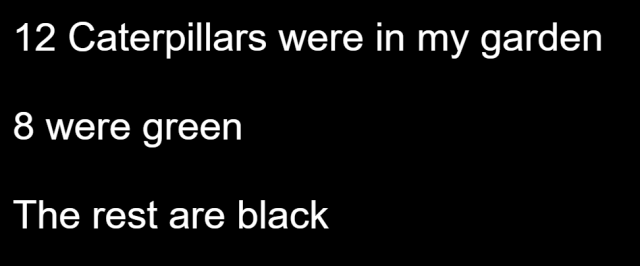
Very Hungry Caterpillars Act 3.png


3 Act: More Muffins!

As I mentioned in my previous post, we have been working on our wellness unit in first grade and this week is on Healthy Eating!  We will be making muffins with our students and I thought this was the perfect time to use the muffin video footage I took over the summer that I was saving for just the right 3 Act Lesson!  I am excited to try it with our kiddos!  Here is a link to the Nearpod Version.

This lesson best fits 1.OA.B.4 for 1st grade and 2.OA.A.1 for 2nd grade.

Check out my previous post for repeated addition using exactly the same footage in a different scenario:)

Act 1

Q: Estimate how many more more muffins to fill up the pan.  Write a too high and a too low estimate.

Act 2

Q: What information do you know?  What information do you need?

More Muffins Act 2.png

Act 3

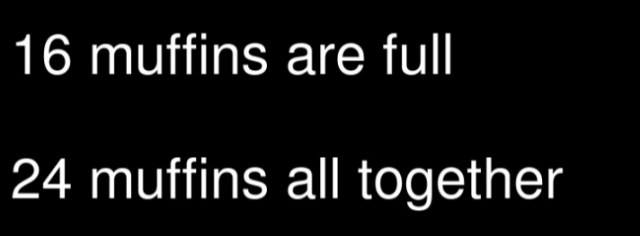
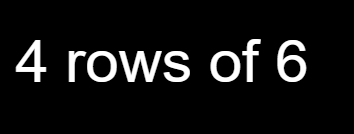
Muffins Act 3.png

I’ll post student responses and a reflection following our lesson.  Please feel free to leave any comments or suggestions for improvement!

3 Act – The Muffin woMAN

We have been working on our wellness unit in first grade and this week is on Healthy Eating!  We will be making muffins with our students and I thought this was the perfect time to use the muffin video footage I took over the summer that I was saving for just the right 3 Act Lesson!  I am excited to try it with our kiddos!  Here is a link to the Nearpod Version.

This lesson best fits 1.NBT.C.4 for 1st grade,  2.OA.C.4 for 2nd grade and 3.OA.A.3 for 3rd grade.

Check out my next post for a subtraction lesson using exactly the same footage in a different scenario:)

Act 1

Act 2

Act 2 Pic.png

Act 3

Muffins Total.png

I’ll post student responses and a reflection following our lesson.  Please feel free to leave any comments or suggestions for improvement!

WTSBTT: Day 6 – Peer Review

We knew we wanted to provide an opportunity for students to peer review the other students work and provide feedback to them.  Today was that day!  We started math class by explaining to students that today they would get a chance to provide feedback on others work.  We talked about what feedback looks and sounds like and that they would provide a “glow” or praise point for each presentation as well as a “grow” or idea for improvement. IMG_5487

We used sticky notes to make this easier to manage.  We used the same chart and after each presentation, took the notes off and stacked them to give to the students presenting.

After reading some of the comments, we found it necessary to talk about feedback being specific and actionable as well as focused on the math.  Many of the comments were about the editing or said things like, “I wish you would have explained it more.”  We used this as an example of how to modify the feedback to be specific by saying, “I wish you would have explained how to round numbers to the nearest tenth more or given more examples.”

We reflected later that maybe in the future, we would allow for two grows, one that focused on the math and one that focused on speaking more clearly or editing tips.

After we watched each of the presentations, the students were given time to read and reflect on their feedback in the project groups.

Below are some pictures of the process.

This slideshow requires JavaScript.


WTSBTT: Day 5

This is the first day that things really started coming together.  I took the students who had completed filming their 3 Act videos to help them edit the videos and upload them to Nearpod (they were really excited about putting them into Nearpod like we do).  Chelsey (Mrs. Meyer) helped edit videos and Shelley (Mrs. Eaton) helped the rest of the students film their videos and activity instructions.

These two groups created really creative 3 Act tasks.  One group’s videos were too large, so we had to upload them to their Google Drive from the iPad, upload them to Vimeo to shrink them down to an SD format, and upload them back to their Drive and onto Nearpod.  The other group needed to do a text overlay for their Act 3 and get them uploaded into Nearpod.

They worked on the slides and response questions and completed their 3 Act Tasks today!  Here are the links to Too Many Smarties! and Stacking Paper.

Chelsey uploaded the other completed videos to her Youtube Channel as students finished up their editing.  Shelley continued to film and we have a few students who need to still edit their videos.  Tomorrow we will be watching all of the videos and providing peer review and feedback.  Students will then revise their activities based on the feedback and submit their final projects!

Read the Day 6 post, for an update on the review and feedback process!

WTSBTT: Day 4

I can’t even tell you how much fun we are all having with this project!  Students are ready to get to work, they are having deep mathematical conversations, and the products are coming along nicely!  Most of the students are at least half way through their projects and they are progressing much faster than we had originally thought they would.

The one thing we wish we would have captured on video (that we will definitely do next time) is the conversations students were having while they were filming.  TIMG_5464he problem solving that was going on was just remarkable to hear from 4th graders.  They were polite and respectful to each other’s ideas, but they were also very focused in making the best possible product.
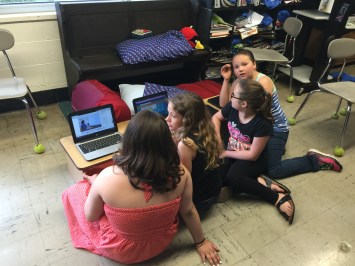
When we started the project, we told the students that we had been asked to present what we had been doing with 3 Act tasks with both of our classes for the School Board.  We could bring two students, and we would love it if they could have their projects completed by that time.  We really weren’t sure it would IMG_5433happen, and we thought we would just have a couple of students go and talk about what they thought about 3 Act lessons, etc.  By today, we realized that it was quite possible we would have actual student projects to share and we were super excited!

The room was noisy and messy and full of conversation!

Read the next post for Day 5!


WTSBTT: Day 3

Mrs. Meyer said she was getting really confused about where each student was on their project, so she created a checklist for them to use to keep track of which parts of their project were done, which were in progress and which hadn’t been started yet.  She put it on their resources page on Canvas, introduced it to the students and had them makeIMG_5462 changes for their group.

It was exciting to look around the room and see all students from both classrooms, working together on projects of all varieties!

This group decided to make a game for rounding numbers to the nearest ten and hundred.  They would bounce a ball and the whiteboard it landed on, would determine which number you must round.  I was so impressed.  I asked them, “how do you get the numbers?”  They said, “they are on the whiteboard.”  I said, “yeah, but how do you know which numbers to put on the whiteboard? Or what to write after you play through once?”  They both looked at each other and said, “oh!  we didn’t think of that!  What if we rolled dice?”  I replied with, “brilliant!  Do you need me to get you some dice?”  They agreed, I grabbed some dice from my office and they revised their game.

Mrs. Eaton helped students practice before they filmed, I helped students film, and Mrs. Meyer helped with video editing, thinking through ideas, and everything else!

Time was soon up again, and we put our things away for the next day.  Read on to see what happened on Day 4!

WTSBTT: Day 2

Our 2nd day of project work, we provided a rubric for students to use when constructing their projects.  We also created graphic organizers for each of the activities that they could use as an outline for their project.  We introduced the graphic organizers and gave them time to get in their groups and fill them out.  Planning was now in full swing.

When we introduced the rubric, we spent extra time on sources.  I discussed how I research for a video lesson by going to Youtube and watching a bunch of videos on the topic.  I make note of the instructional strategies I find useful, and disregard those I don’t like.  I think about when I have learned about the subject before and what I found useful.  I look up the iReady lessons and other resources that provide teaching points.  We provided them with the iReady example lessons for each of their topics, and we created a resource page in Canvas that gave them links to helpful resources, programs they might use, and examples of 3 Act tasks.

This slideshow requires JavaScript.

By the end of the day, we already had students who were ready to film.  We split up and I went into our technologist’s room next door to help with the filming while Mrs. Meyer and Mrs. Eaton, helped monitor the planning of other groups.  We wanted this all to be student led, so we facilitated their project creation by asking questions such as, “how will your audience know what you are teaching them?”  “Is there a visual aid you could use to make the process more clear?”  We gave them hints on filming such as, “when you are drawing on the whiteboard, we can only see your back.  What if you tried filming from a different angle or scooting to the side a little as you write?”

Time flew again and we had to stop for the day.  Follow day three, coming soon!